Elaeagnus x reflexa
What does it look like?
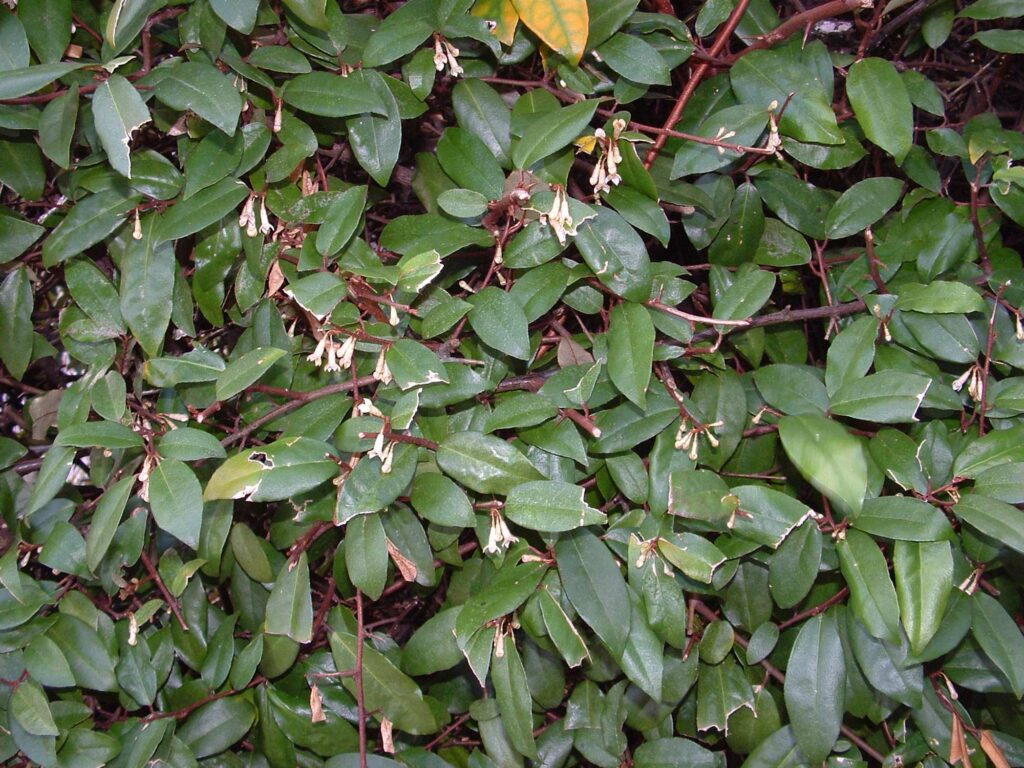
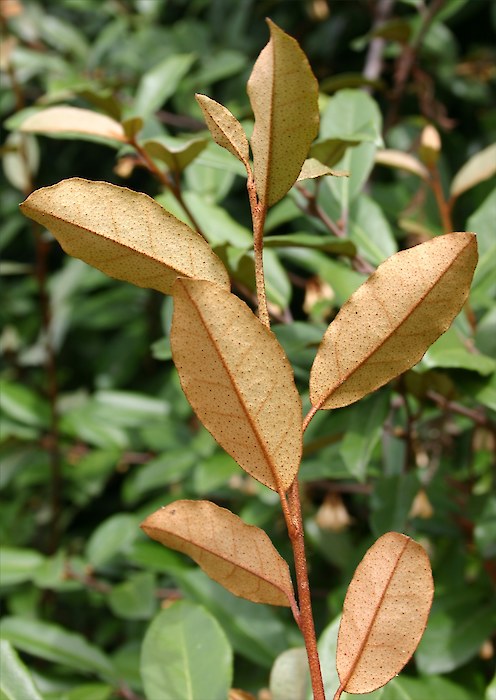
Dense, spiny, vigorous, scrambling shrub, spreading over support to 20m tall. Stems are red-brown and long, arching and tough. Older stems have sharp spines. Introduced originally as a hedge species. Oval leaves green above & silvery or scaly brown on undersides. Hanging clusters of small, white fragrant flowers (Mar-May), followed by reddish-orange, drupe-like fruit (18 x 10 mm). Very tough, suckering rootstock.
Why is it a problem?
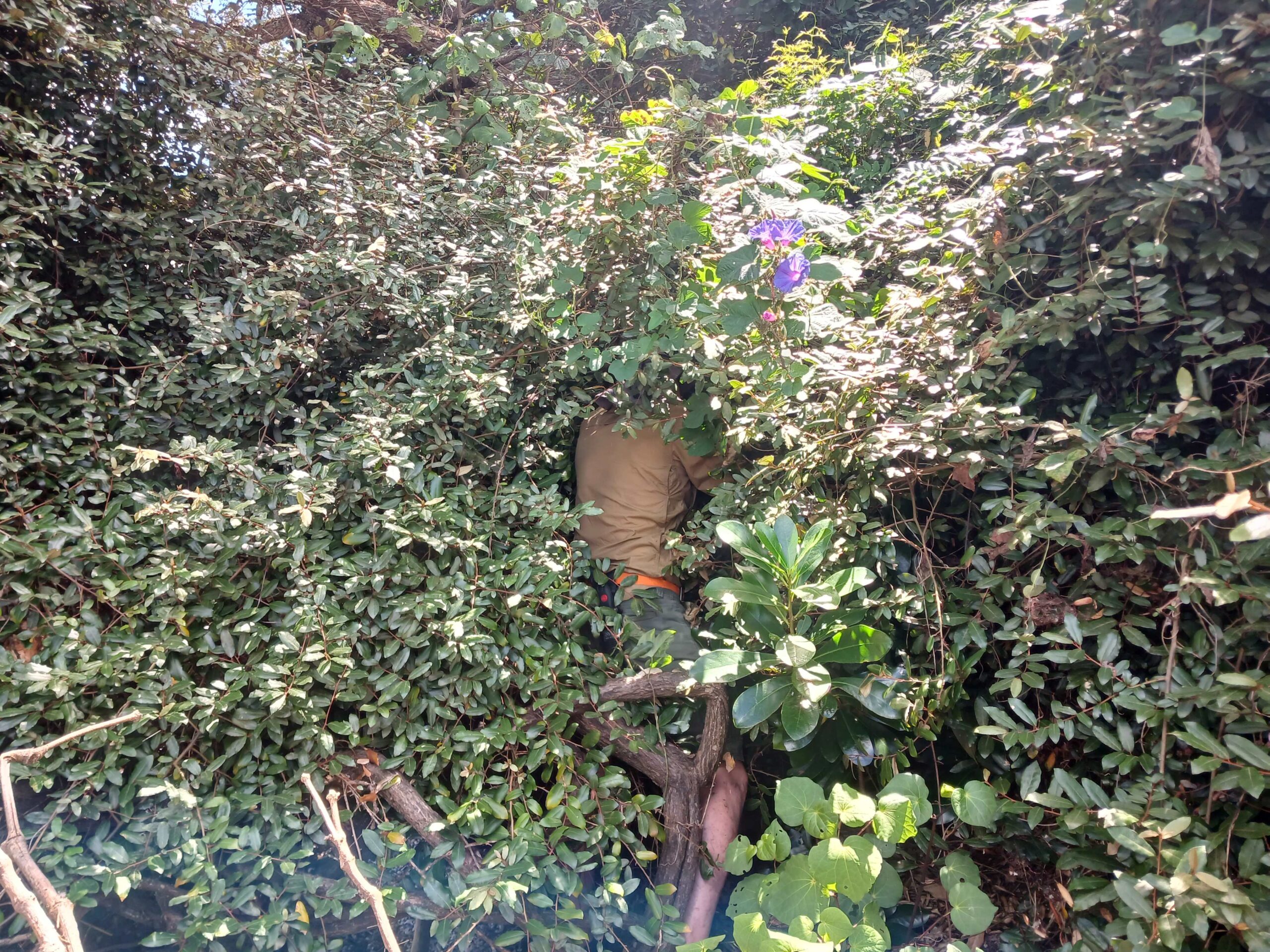
Extreme longevity, scrambling, spreading growth form and suckering roots, means it can form dense stands that slowly smother all other plants to canopy height. It can alter soil nutrient status by nitrogen fixing, affecting which native plant species can grow there.
Not grazed. Tolerant of drought, wet, high to medium-low temperature, wind, salt, most soil types, and moderate shade.
It prefers higher light levels and invades all types of shrublands, open areas within forest, roadsides, and rank areas. It is also able to invade even relatively shady sites, where, because it is extremely long-lived, it can await a light gap.
What can we DO about it at Whangarei Heads?
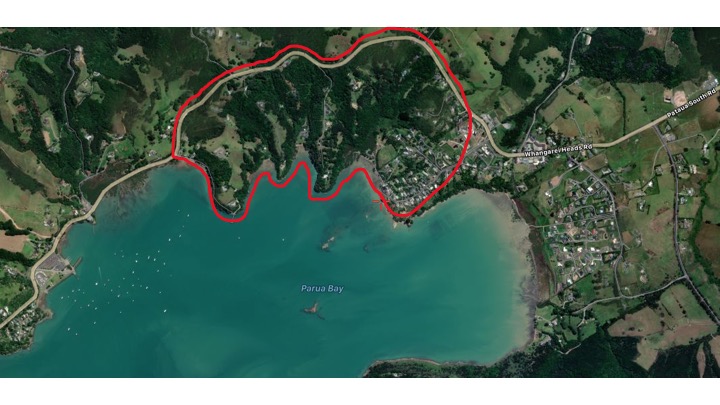
The epicenter of the infestation is in McLeod Bay, where it was originally introduced by early farmers for hedging purposes. Locations outside of here are growing in number and in the degree of infestation. While seemingly slow to spread, once established it becomes the dominant vegetation and is extremely hard to kill. Killing while it is still small, or even while it is an individual large shrub rather than a dense inaccessible thicket is key.
How does it spread?
Birds, and possibly possums and goats, spread the seed. Seed, while uncommon further south, is produced prolifically in Northland. Layering stems and suckers are spread in dumped vegetation. Common sources are old homestead and farm sites, roadsides, hedges, and tips.
How do I control it?
Special disposal notes: Cut stems can layer and resprout where in contact with the soil. Hang up off the ground to dry out, pile up to dry out and burn.
Additional safety note: Wear gloves and eye protection when working with Elaeagnus as its spines can cause injury.
- Cut stump application: Cut within 2 cm of ground level and immediately treat stump with Weed Action’s Gly/ Met Mix or picloram gel.
- Drill & Fill: Drill using 12-13mm auger bit sloping holes into the sapwood at 7-8 cm intervals around the base of the trunk and any exposed roots & immediately fill each hole with Weed Action’s Gly/ Met Mix.
- Spray seedlings with triclopyr at 6mls/L of water + penetrant, best in spring and autumn
Extremely hard to kill. Repeat treatments needed.
CAUTION: when using any herbicide or pesticide PLEASE READ THE LABEL THOROUGHLY to ensure that all instructions and safety requirements are followed.
Get in touch with us at info@weedaction.org.nz if you would like some assistance in applying the above control techniques or equipment and herbicides to do so. We can supply any of the products or equipment needed, for free, thanks to support from Northland Regional Council.